Skip to content

In the world of digital marketing, data is the only language that truly matters. If you aren’t measuring your progress with data, you are essentially making decisions based on gut feelings. To make informed decisions, you need data insights to truly understand what’s working and what isn’t on campaigns.
The best way to understand if your SEO (search engine optimization) efforts are paying off is through SEO reporting. SEO reporting is the process of collecting, organizing, and analyzing data to show exactly how your website performs in search engines. This reporting serves as the vital bridge between your strategy and the results that affect your business. A high-quality report should do more than just list numbers; it should tell a story of growth, justify your marketing spend, and provide a clear, data-backed roadmap for your next steps.
Key Takeaways
- SEO reporting acts as the vital bridge between your strategy and the results that actually affect your bottom line.
- Prioritize high-intent keyword rankings and organic conversions over vanity metrics to ensure your data stays aligned with your business goals.
- Integrate data from multiple sources, such as Google Analytics and third-party tools like Ahrefs and Semrush, to provide a complete and validated view of your performance.
- Streamline your reporting workflow with API integrations and customized dashboards to reduce human error and save time for actual optimization.
- Every high-impact report must include an executive summary and a clear action plan to turn historical data into future growth.
- Build trust through transparency by providing written context for data shifts and addressing negative trends with a specific plan to pivot.
The Significance of SEO Reporting
The primary purpose of any SEO report is to demonstrate how your search engine optimization efforts impact your bottom line. Without a clear reporting structure, it is impossible to set realistic expectations for your team or stakeholders. A professional report provides a snapshot of your site’s health and the effectiveness of your ongoing content marketing efforts. It allows you to see if your investment in areas like link building and on-page SEO optimization is actually moving the needle or if your strategy needs a pivot.
Beyond just looking at past performance, these reports are essential for future-proofing your business. They allow you to perform keyword analysis to see what your target market is searching for right now. These reports also provide landing page performance insights so you can see which parts of your site are successfully converting visitors into leads. Whether it is a standard monthly report or a comprehensive quarterly review meeting, the goal remains the same: use data to make smarter, more profitable business decisions.
Benefits of SEO Reporting:
- Demonstrate ROI: A professional report proves that your marketing spend is driving results.
- Identify Pivot Points: Use data to see if your current strategy is working or if you need to change your approach.
- Benchmark for Success: Establish benchmarks to measure your performance against to see your progress MoM and YoY.
- Future Proofing: Reporting allows you to analyze what your audience is searching for right now so you can stay ahead of the curve.
Key Metrics and KPIs: What Actually Matters
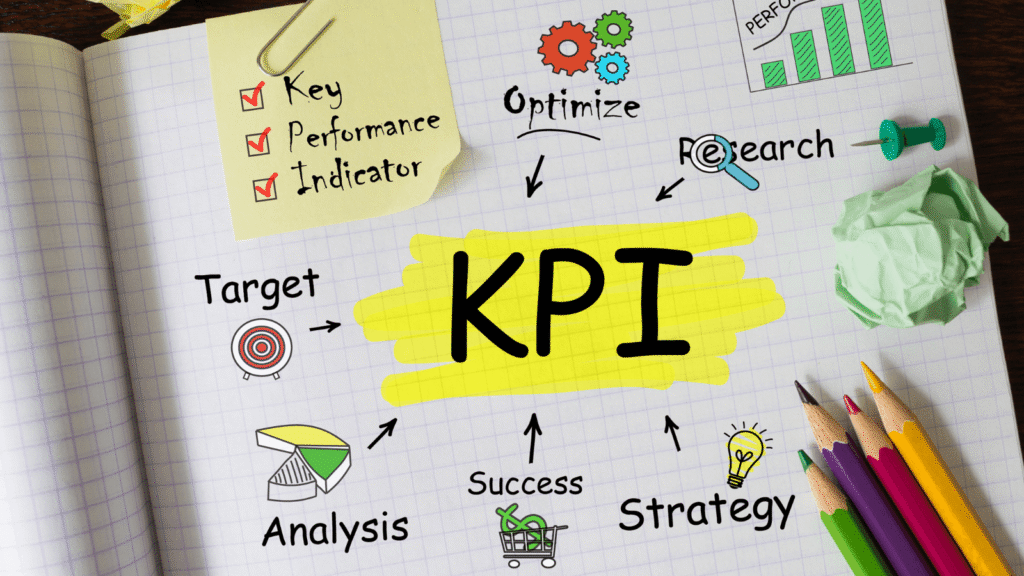
Not all data is created equal. Before you start creating your report, make sure the SEO metrics you report on align with your business goals. For example, if you are looking to increase traffic to your site, your KPIs would be click-through-rate (CTR) and organic traffic. If your goal is to increase brand awareness and search visibility, your KPIs would be impressions, SERP features, and keyword rankings. No matter what your business goals are, make sure you are tracking KPIs that are directly aligned with your overall business goals. The best SEO reports cut through the vanity metrics and focus on these core pillars:
Organic Traffic and Clicks
The most basic measure of SEO success is how many people find your site through search without clicking on an ad. We look at organic clicks and organic search traffic conversion rates to determine if we are attracting high-value visitors or just driving empty traffic.
Keyword Rankings
Tracking your position for specific user search queries is important because it gives you a snapshot of how you are doing compared to competitors. Two important metrics to consider when reporting, conducting keyword research, and analyzing keyword rankings are search volume and keyword intent. There are 4 types of keyword intent: informational, navigational, commercial, and transactional. Commercial and transactional intents are the most important search rankings to consider because they are the ones that lead to conversions.
Technical SEO Health and Site Experience
A broken site with a poor user experience will never rank well. To make sure your site is set up for success, complete regular site audits, make sure your site is indexing correctly, and monitor core web vitals and technical issues to ensure your page speed and user experience meet search engine standards. Also, keep a close eye on your backlink profile for broken links and domain authority to gauge your site’s overall authority and trustworthiness in the eyes of search algorithms. Your report should include a section on the site’s technical health to provide your audience with a clear picture of the site’s overall health.
Data Collection: The Key to a Complete Report
To get a complete, 360-degree picture of your performance, you must pull data from several different sources. This process of combining data from different sources is known as data integration and is what separates a basic report from a complete one. Relying on a single source can lead to a narrow and often inaccurate view of your success. Here are the keys to properly pull and validate data so you have a full picture of your SEO strategy:
Primary Data Sources
Most professional reporting starts with Google Analytics 4 (GA4) and Google Search Console (GSC). GA4 provides organic traffic insights and user behavior data, while GSC shows you exactly which keywords and pages are driving impressions and clicks.
Third-Party Sources
To gain deeper insight, we integrate data from specialized SEO reporting tools such as Semrush and Ahrefs. These tools provide more in-depth data like keyword intent, referring domain insights, domain rating, and comprehensive competitor analysis, so you can see how you stack up against the competition.
Cross-Platform Validation
The most critical part of this stage is cross-platform data validation. Different tools often report numbers slightly differently due to how they track users. It is important to be transparent when reporting on where your data comes from, so your report is accurate and credible for all stakeholders.
How to Structure Your Report
A report should be easy to digest and logically organized. The most important information should be easy to find and presented in a clear and simple way. Remember, the point of this report is to tell a story about how your SEO efforts are going and how they are impacting the business. Your audience shouldn’t have to sort through raw data and come to conclusions on their own; the data should always be laid out clearly so anyone can understand it and how it affects the business.
The Elements of a High-Impact SEO Report Template:
- Executive Summary: Start with a high-level overview of the month’s or quarter’s big wins and current challenges.
- Data Visualizations: Use charts and trend lines to make performance patterns obvious at a glance. Blank spreadsheets full of numbers make it hard for your audience to fully grasp performance.
- Actionable Insights: Every section of the report should explain what the data means for your business.
- Clear Action Plan: Conclude the report with the specific steps your team will take in the coming month.
Making The Reporting Process More Efficient
Reporting should never take more time than the actual SEO work itself. This is why it is important to prioritize automation and efficiency in the reporting process. By using automated reporting tools and customizable dashboards, you will be able to provide real-time monitoring that enables immediate pivots if performance declines.
Standardize Data Across Workflow
Team collaboration and workflow optimization are much simpler when everyone is working with the same data. Be sure to standardize the tools and data that every team is working from so there are no discrepancies. For example, if you decide to use Ahrefs to view keyword rankings, make sure this practice is standardized across your organization so everyone is working with the same data.
API Integration
API integrations allow you to automatically export data from your tools to your reports and dashboards. Establishing this process will eliminate the risk of human error that comes with transferring data manually.
Customized Dashboards
The best way to automate the reporting process is to create a customized dashboard. Customized dashboards will let you have all your KPIs in one place, without the clutter of other vanity metrics. This will help you automate the reporting process because you won’t have to go to all the different tools to find your KPIs; they’ll all be in one place. The best way to build these custom, all-in-one dashboards is through Google’s Looker Studio’s free templates with APIs from each of the tools you are using to measure your KPIs.
Best Practices for Impactful Reporting

To build a report that actually drives your business forward, you must prioritize clarity and accuracy. High-quality reporting is about more than just exporting data. It is about making that data understandable for every stakeholder involved in the project. Following these best practices will help you move from a beginner in data presentation to an SEO specialist.
- Establish Standardized Definitions: Before you send your first report, make sure everyone agrees on what the metrics mean. Define each KPI clearly and simple so there is no confusion on what you are measuring. For example, you will want to define exactly what constitutes a lead or a conversion for your specific business goals. This ensures that everyone in the organization is always on the same page when discussing performance.
- Provide Context Through Commentary: A chart showing a traffic increase is great, but your readers need to know why it happened. Always include a brief written analysis explaining the causes of the shifts in your data. This is a great time to highlight how your strategy is affecting the data.
- Focus on Actionable Insights: Every section of your report should answer the question of what happens next. If you notice a specific page is performing well, your insight should explain how you plan to replicate that success across other parts of the site. When the data shows a decline in performance, discuss how you are planning to pivot the strategy to turn the tide.
- Maintain a Consistent Schedule: Reliability builds trust. Whether you report weekly, monthly, or quarterly, stick to a consistent cadence. This consistency allows you to track long-term trends without gaps in your data.
Common SEO Reporting Mistakes to Avoid
Even the most experienced SEO professionals can fall into traps that make their reports less effective. Avoiding these common mistakes will keep your strategy grounded in reality and focused on growth. If your reporting feels stagnant, check to see if you are accidentally making these errors.
- Overemphasizing Vanity Metrics: It is easy to get excited about a high number of impressions or a low bounce rate. However, these figures do not always correlate with revenue. Always prioritize metrics that directly impact your bottom line, such as organic conversion rates and leads.
- Ignoring Negative Trends: If you see a sudden dip in traffic, do not ignore it or try to hide it. Address the discrepancy head-on by investigating if it was caused by a technical error, a seasonal shift, or a search engine algorithm update. Present what your investigation uncovers, a hypothesis on how it could happen, and how you are going to update the strategy to address the dip. Transparency is the only way to build a sustainable strategy and trust with your audience.
- Reporting Without an Action Plan: A report that examines only the past is a missed opportunity. One of the biggest mistakes is failing to include a clear list of next steps. Your report should always lead directly into your next strategic steps for the coming period.
- Using Inconsistent Measurement Periods: Comparing a thirty-day month to a thirty-one-day month without context can skew your results. Be careful to use consistent date ranges so your year-over-year and month-over-month comparisons remain fair and accurate.
Is Your Reporting Driving Growth?
SEO reporting is not just a document you receive at the end of the month; it is the heartbeat of your marketing strategy. It proves that your investment is working and points the way toward your next big win. If your current reports are just a collection of confusing charts without a clear story, it is time to upgrade your perspective.
Your business deserves transparent strategies built to achieve your goals. At Digital Strike – Targeted Marketing, we turn raw data into a customized strategy designed to accomplish your business goals. Connect with us today to receive your customized, data-driven SEO strategy.