Skip to content

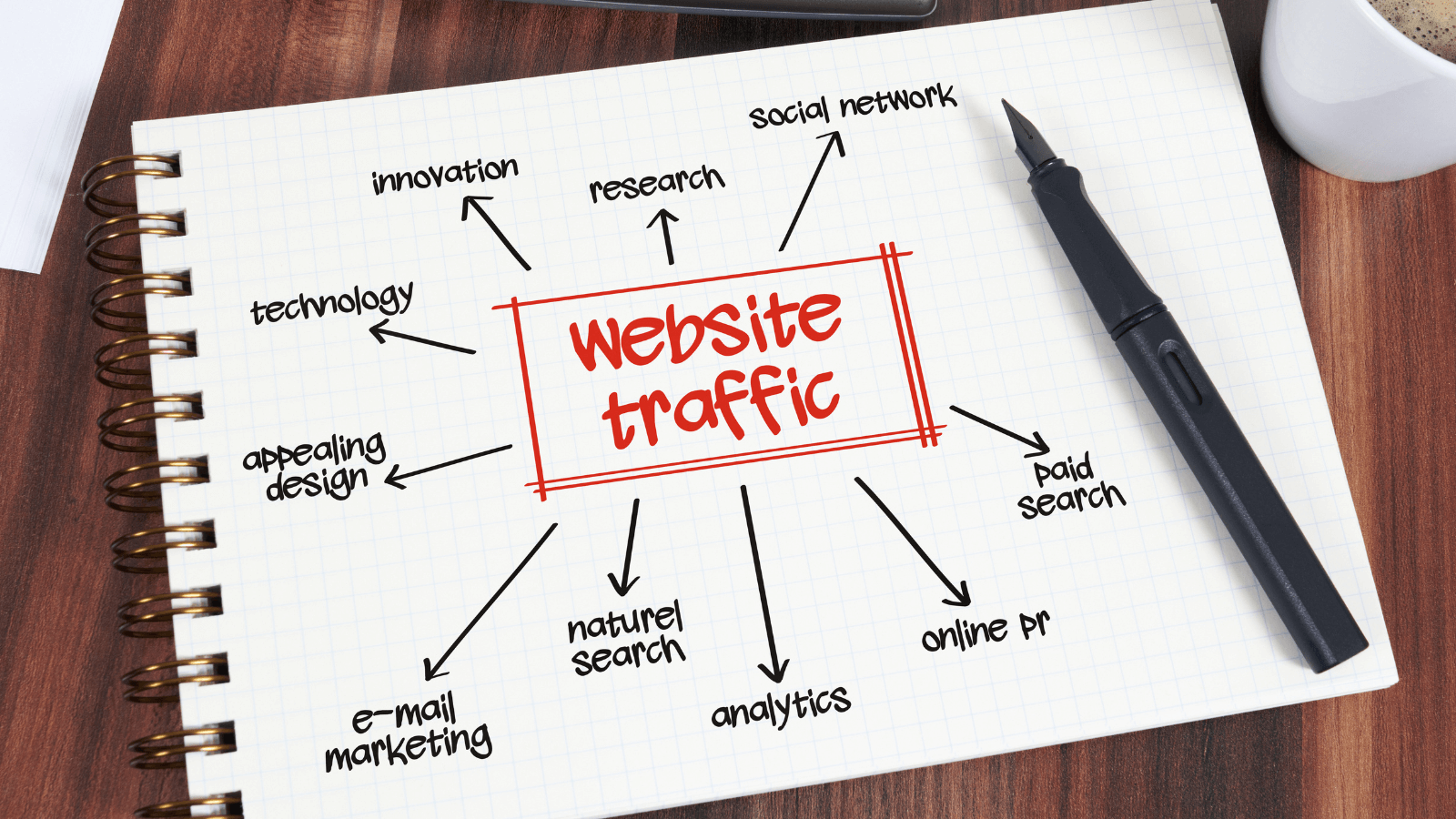
You could have the nicest-looking and most expensive website ever, but if no one is ever using it, it’s worthless. Website traffic is a key component of your online brand presence. Obtaining website traffic nowadays is significantly harder than it used to be, with the rise of zero-click searches and the increasing volume of content being published daily, making it increasingly challenging to stand out. Over 4.4 million blog posts are published daily, making it incredibly hard for you and your website to cut through the noise.
But wait! There are some very effective strategies that you can employ to cut through the noise and earn organic traffic for your website. In this blog, I’ll give you 5 strategies you can use to optimize your website and start getting the traffic your brand and website deserve!
Understanding and Measuring Traffic
Before you can optimize your website to get more traffic, it’s important that you know how to measure traffic and what metrics matter most. First thing you’re going to need is a place to measure your site’s performance. There are a few sites out there that will help you measure your site’s performance, including paid options like Ahrefs and SEMRush, as well as free tools from Google like Google Search Console and Google Analytics.
Once you’ve connected your website with any of these great tools, it’s time to figure out what metrics to track when gauging your site’s performance.
Key Metrics to look at:
Engagement Rate: This is a metric in Google Analytics that tracks the number of “engaged sessions” each page has on your site. An engaged session is one where a visitor stayed longer than 10 seconds, viewed 2 or more pages, or completed a conversion event. This is a great metric to determine the quality of traffic your site is receiving. Engagement rate helps you determine if the visitors to your site find your content relevant to their needs.
Traffic by Source: This metric in Google Analytics shows you where your traffic is coming from. This allows you to see what channels are working for your website and which ones are not, so you can dedicate resources accordingly.
Unique Visitors: This metric shows you how many individual people visit your site within a certain timeframe. Measuring unique visitors is better than measuring sessions because one user could visit your site 10 times and count for 10 sessions, but they are only one visitor. Unique visitors give you the actual size of your audience and your site’s reach.
Top Pages: In Google Analytics, you can filter top pages by engagement or conversions, depending on your goals. Top pages will show you what content on your site is the most engaging to users. This will help you find your most valuable pages and take what is working on those pages and apply it to the rest of your site.
5 Effective Steps To Drive More Traffic to Your Site
Here are 5 things you can start doing to optimize your website for more traffic:
1. Create Helpful and Meaningful Content

To drive more traffic to your site, you are going to need to rank higher for more keywords. The best way to rank higher for keywords is to create content that is helpful and engaging to users and your target market.
The way that Google evaluates sites is through its EEAT guidelines. Basically, to rank well on Google or any other search engine, you must prove that you are trustworthy and an authority in your industry. To establish yourself as an authority figure in Google’s eyes, you must have a library of helpful and engaging content on your website.
The best way to create this content for your website is by establishing a blog for your site. There are tons of benefits from blogging, but the main benefit is directly improving your overall search rankings. Your blog should cover different topics in your industry and should be a helpful resource to your target market.
The best way to find the topics you should cover is to do some keyword research to find out what users are searching for. Look for keywords that have a decent amount of search volume and are question-based. An example of a keyword that would be a good blog topic for a financial firm could be “when should I start planning for retirement?”. A blog optimized for this keyword would effectively show search engines the firm’s authority in the industry because it showcases its expertise on an industry-related topic. Once you show the search engines you are an authority through helpful content, they will start to rank you higher for keywords because they have more confidence that users will enjoy your site and find it helpful.
Make sure that your content is always relevant to your business, your brand, your target market, and your business goals. Don’t just write a blog because a keyword has high search volume if it doesn’t align with your business and your target market.
Running a content library has a lot of benefits, but it is an ongoing effort. It is important that you update your content library regularly to make sure your content is up to date with what is going on in your industry. This involves writing new blogs that cover any advancements in your field, and updating any older blogs that are out of date or have lost rankings.
2. Optimize Every Page on Your Site for Keywords 
If you want people to come to your site, you must optimize your site to rank for commonly searched keywords. Every page on your website should be optimized for a main keyword that is relevant to the content on that page.
The first step in the keyword optimization process is keyword research. During keyword research, you should be looking for keywords that are related to your brand and your services. When deciding what keyword to go after, it is important to look at three things: search volume, keyword difficulty, and intent. Search volume is the average times a month a keyword is searched. The higher the search volume, the more users searching that keyword, meaning the more opportunity for your site to get traffic. Keyword difficulty is a number between 1-100 rating how difficult it is to rank on the first page for that specific keyword. When deciding what keywords to target, you must evaluate both the search volume and keyword difficulty. Keyword intent is what type of content the user is expecting when they search for that keyword. The intents are commercial, transactional, informational, or navigational.
When deciding on what keywords you will want to target, it is important to factor in all three factors: keyword difficulty, search volume, and intent. You should pick keywords that have a decent keyword volume, but are relatively easy to rank for on the first page. You should have a mix of commercial/transactional and informational intent keywords so you can rank for a wide range of keywords. Some tools that are great for keyword research are Ahrefs Keyword Explorer, SEMRush’s Keyword Overview, or Google Ads’ Keyword Planner.
To optimize your pages, start by including the target keyword in the title tag, the H1 heading, and the URL. Next, you should write high-quality copy on each page while incorporating the target keyword and related secondary keywords. Be sure when writing copy to match the content to the user intent for the target keyword to reduce bounce rate. For example, if your target keyword was “financial advisors near St. Louis,” which has commercial and transactional intent, meaning that the user is likely looking for or evaluating products or services. The content on this page should include in-depth descriptions of services, reviews, or comparison charts to assist the customer through the evaluation stage of the purchasing process.
The last thing you will need to do is place your target keywords in the meta description and alt text of the images on the page to reinforce relevance to users and search engines. The target keyword in the meta description will reassure the user that your page is relevant to their search. Putting the target keyword in the alt text of some of the images on the page will help search engines understand that the page is relevant to the keyword.
3. Build Out Your Link Profiles

Building both internal and external links will help you increase your organic traffic.
Internal links are links on your site that point to other links on your site. These will help you get more traffic in a couple of ways.
The first way is that they will show Google what the most important content is on your site. The more links a page has, the more important Google will view it.
The second way internal links can help improve your organic traffic is through spreading the ranking authority to poor-performing pages. If you have a page that is performing really well in search rankings, adding links to a few poor-performing pages will help apply the positive authority from the successful pages to the poor-performing pages. In addition to the added authority, you might also get more traffic to the poorly performing pages from people clicking on the links and visiting those pages.
External links from other sites pointing to your website. External links, also known as backlinks, serve as endorsements from one site to another. When a high authority site links to your site, you will gain authority in Google’s eyes. There are a few ways to gain backlinks, like guest posting, sharing research or case studies, or collaborations with other businesses and websites.
4. Regularly Audit Your Site
Google’s main goal, besides world domination, is to serve users the most relevant and reliable search results possible. Being relevant to the search is only half the battle. You could have the most relevant page with the best content in the world, but if your site takes forever to load, you will be buried in the rankings. This is why the technical health of your site is so important.
Performing regular audits on your site health will help ensure that your site is fully optimized. Some of the most important aspects to look at when performing a site audit:
- Page indexations
- Page redirects
- 404s
- Orphan pages
- Server errors
- Core Web Vitals (LCP, INP, CLS Issues)
Regularly checking and fixing these parts of your site will ensure that your site is user-friendly and loads quickly. It is also important to make sure your site is mobile-friendly, with 64% of web traffic coming from mobile users. You can perform a site audit with a free Google Search Console account.
5. Enhance Your Pages with Schema

Adding schema markup to your pages will boost your overall discoverability with both search engines and AI. Schema Markup is code that you put on different parts of your website to label them. This allows search engines and AI crawlers to understand what the different parts of your site are and what they mean to users.
Schema will help drive more traffic because it will allow your website to appear in different SERP features called rich results, like AI overviews, featured snippets, product results, and people also ask. These will help to improve your traffic quantity and quality. Schema will help improve your traffic quantity because you will be more visible, and the more visible you are online, the more traffic you will receive. Appearing in these rich results will improve your traffic quality because the users clicking onto your site will be clicking on with more information, meaning that they have already decided that your site and brand align with their needs.